
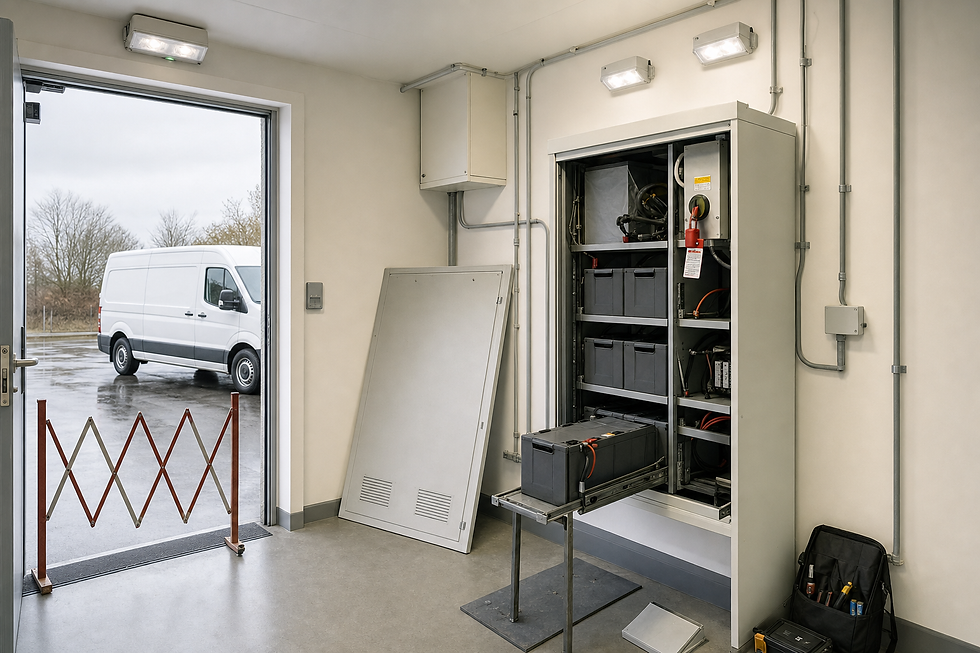
Keep existing emergency lights ready for use
Warning signs investigated
We look beyond the indicator to check batteries, charging and connections.
Deterioration identified
We assess visible condition and signs that useful battery capacity has declined.
Replacement needs explained
We tell you when a suitable battery change should be considered and why.
Spot battery decline before backup time disappears
Emergency lighting batteries lose capacity as they age. Charging faults, loose or damaged connections and physical deterioration can also leave a unit unable to sustain its intended lighting period. Warning signs may include fault indicators, failed functional operation, visible battery damage or luminaires that go dark too soon when normal power is interrupted. During an emergency light battery service, we review the unit, inspect the battery condition and connections, and identify signs of decline. We then explain any suitable battery replacement needs rather than simply clearing an indicator and hoping it stays quiet.
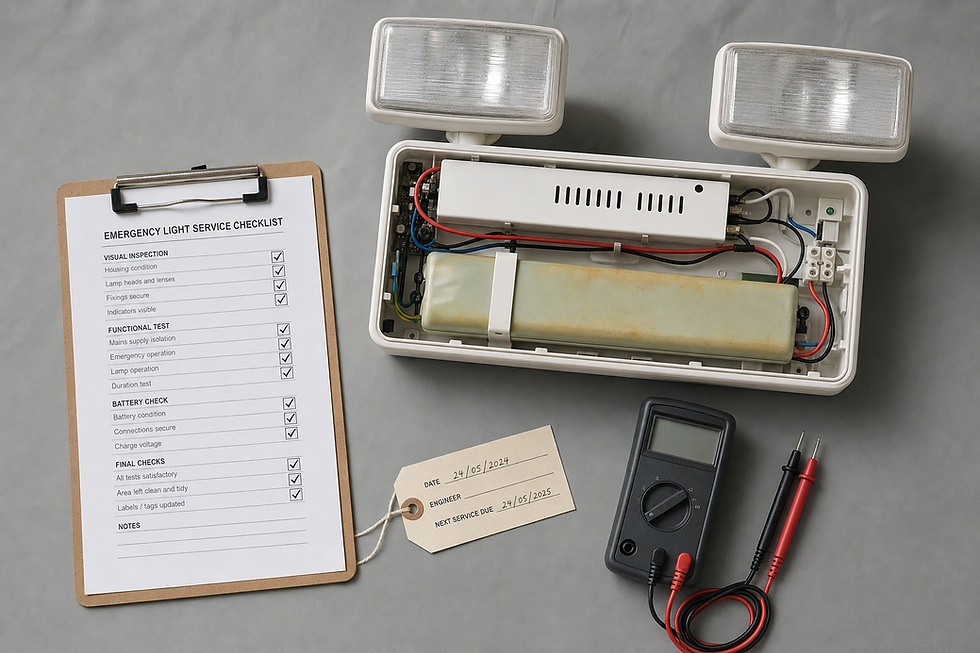
Direct experience servicing Eaton Lighting equipment
We've carried out ongoing work with Eaton Lighting units, giving us detailed experience of the batteries and supporting equipment found in emergency lighting systems. Servicing helps maintain readiness and can identify units approaching the end of useful battery life before the problem becomes a failed backup period. It also provides an opportunity to distinguish a tired battery from an issue involving charging or connections. Supplying the system make, unit type, fault lights and known battery details before attendance helps us understand what equipment may be involved.
Frequently asked questions
What signs suggest an emergency light battery is failing?
Look for fault indicators, failed functional operation, visible swelling or damage, and fittings that do not remain lit during an interruption. These signs need investigation because the battery may not be the only possible cause.
Does a fault light always mean the battery needs replacing?
Not necessarily. A fault may involve reduced battery capacity, charging equipment or a poor connection. We review the unit and its condition before identifying whether battery replacement or different attention is suitable.
What information should we provide before a service visit?
Send the system make, unit model, displayed indicators and any known battery details. Tell us what happens during a functional check or power loss, and note visible damage without touching unsafe equipment.