

Keep escape routes visible during a power loss
Routes assessed properly
We consider exits, stairs and changes of level before fixing luminaire positions.
Battery options explained
We explain central and self-contained arrangements without burying you in jargon.
Future access considered
We plan equipment positions with later checking and battery attention in mind.
Lighting that takes over when mains power fails
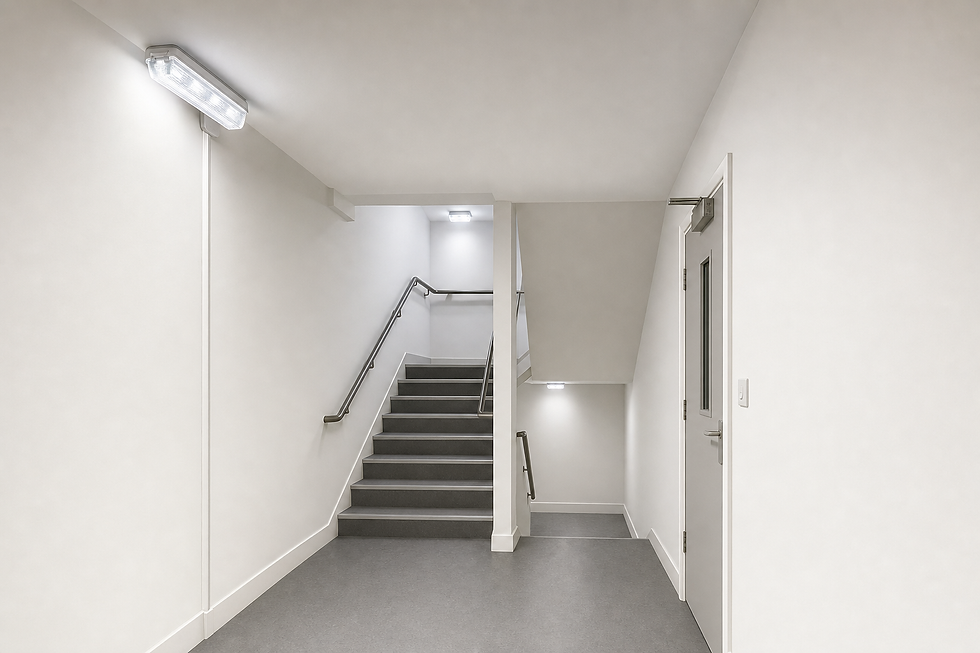
A power cut shouldn't leave an escape route in darkness. We install emergency lighting to illuminate routes, exits, changes of level and other key safety points when the normal supply stops. The layout of the premises, escape strategy and operating environment all affect where luminaires belong and what type of equipment is suitable. We consider the required operating duration as well as practical cable routes and access for later attention. Depending on the building, the design may use self-contained fittings with individual batteries or a system supported by central or dedicated backup batteries. We explain the difference before equipment is selected.
Detailed experience with lighting and backup power
We begin with a site review, map the important areas and plan luminaire positions before cabling and fitting. Once installed, we carry out functional checks and explain the completed arrangement at handover. We've carried out emergency lighting work for Eaton Lighting for 20 years, giving us sustained experience of the equipment and the backup systems behind it. That depth matters when system load, battery capacity and expected duration all have to work together. It also means we can look beyond a failed fitting when the underlying problem may sit elsewhere in the system.
Frequently asked questions
What is the difference between central and self-contained lighting?
A self-contained luminaire carries its own battery. A central arrangement supplies multiple emergency lights from dedicated backup equipment. The suitable option depends on the building, system load, duration and existing setup.
How do you decide where emergency lights should go?
We review the premises layout and escape strategy, paying attention to routes, exits, changes of level and key safety points. The environment, intended duration and practical wiring routes also influence positioning.
Can you work with an existing emergency lighting system?
We can review existing equipment when planning additions, replacement work or battery support. Compatibility and the condition of the current system need to be established before we confirm the appropriate scope.